
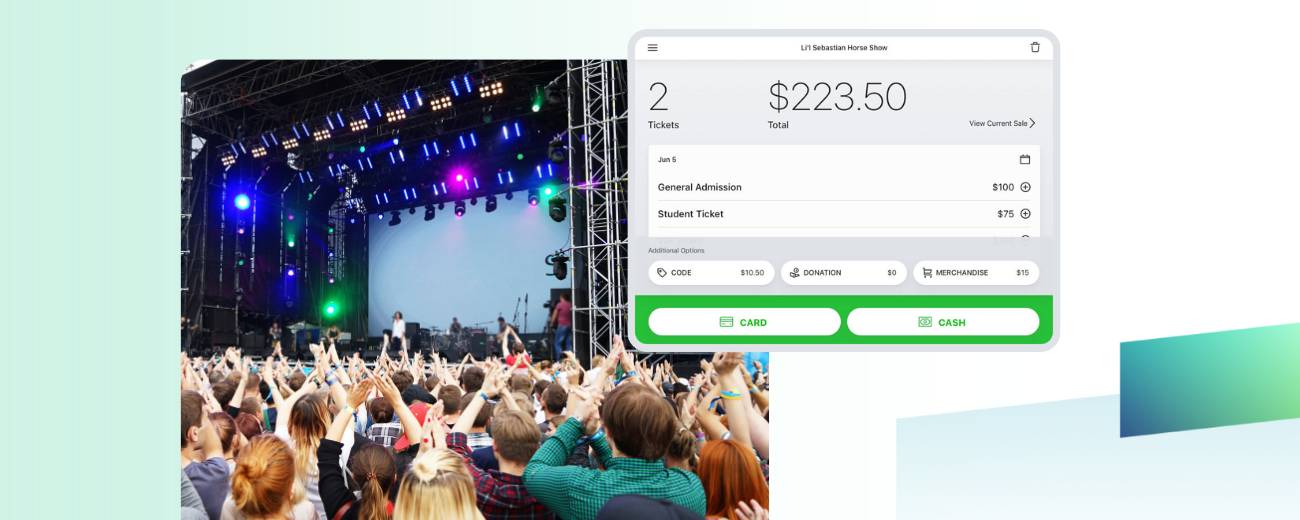

In simple terms, General Admission means entry without assigned seating. Attendees pick their spots on a first-come, first-served basis once they arrive. This format works just as well for standing events as it does for open seating areas, bleachers, lawns, or general-access sections within a venue.
Picture a festival lawn or open-floor concert: attendees arrive early, choose their vantage point, and move freely (adjusting their view and experience) as the event unfolds.
When you’re planning your next event, one of the biggest choices you’ll make is how people experience your space. Do you want attendees to walk directly to an assigned seat, or do you want them to enjoy the freedom of an open floor?
That’s where General Admission (GA) tickets come in. They’re a popular, flexible option used across concerts, fairs, festivals, attractions, and sports events. In this guide, you’ll learn exactly what GA means, how it works, when to use it, and how to set it up with TicketSpice.
By the end, you’ll know exactly when GA is the right move, and how to make it run smoothly.
What Is General Admission Seating?
While General Admission tickets refer to the type of access an attendee purchases, General Admission seating describes how the space is arranged. GA seating might include open benches, bleachers, standing zones, lawn areas, or unassigned chairs, depending on the venue and event format. All of these seating options give you the flexibility to scale your layout while providing an area for the audience to flow throughout your event.
Benefits of General Admission Seating
General Admission offers several advantages for both attendees and organizers.
⭐ Flexibility: Attendees choose where they sit or stand and can shift throughout the event if allowed.
⭐ Affordability: GA tickets are typically lower priced, making your event more accessible.
⭐ Simplified logistics: You do not need a seat map or assignment system, which speeds up check-in and reduces complexity.
⭐ High energy and atmosphere: GA environments often feel more dynamic, social, and engaging.
It’s easy to see why General Admission is the standard for festivals, sports games, and community events.
Challenges of General Admission Seating
While General Admission tickets offer flexibility and affordability, there are some drawbacks to consider as well. The uncertainty around finding a good seat might spark anxiety and negative associations for some attendees. Hunting for a seat in the crowd can be especially stressful for young families, as splitting up to sit apart is not an option.
Additionally, general admission ticketing can lead to overcrowding in popular areas of the venue, especially during peak times or at smaller venues. To mitigate the downsides of general-admission ticketing, plan crowd management and safety measures ahead of time.
Considerations & Tips for Organizers
Here are practical ways to make your GA event run smoothly:
✨ Create a clear entry flow – Designate visible entry points and set up directional signage so guests know exactly where to go.
🎟️ Use wristbands or QR codes for re-entry – Give attendees an easy way to move in and out of your venue while maintaining security.
📩 Communicate expectations ahead of time – Include arrival tips, recommended entry times, and seating notes in your confirmation emails.
⭐ Offer a mix of GA and premium options – Add early entry, VIP sections, or reserved rows to give guests more choice.
🧑🤝🧑 Train staff to support GA flow – Position team members where attendees may need guidance or where crowds may gather.
General Admission vs. Other Ticket Types
Setting Up General Admission Tickets in TicketSpice
Setting up GA tickets in TicketSpice is simple and intuitive. Follow this streamlined setup structure:
➡️ Choose General Admission as your ticket type.
➡️ Set your venue capacity and ticket limits.
➡️ Create upgrades or layered access, such as VIP or early entry.
➡️ Enable rapid QR code check-in.
➡️ Customize your confirmation emails with arrival details.
➡️ Use onsite tools to scan, edit, or upgrade tickets day-of.
TicketSpice makes GA setup effortless for concerts, festivals, attractions, or multi-day events.
Reserved Seating Strategies
Reserved seating is valuable when predictability matters. It helps families, VIP guests, and accessibility groups feel confident they’ll have a comfortable, guaranteed spot. Reserved seating also enables higher-tier pricing and creates a sense of exclusivity for premium sections.
Best Practices for Implementation
To make your General Admission event run smoothly, keep these strategies in mind:
✅Communicate clearly about arrival times and viewing areas
✅Monitor crowd flow throughout the event and adjust as needed
✅Offer upgrades or add-ons
✅Use attendee data from past GA events to inform future layouts and capacity planning.
How to Choose the Right Ticketing Setup for Your Event
Start by evaluating your audience. Families, accessibility groups, and corporate groups may prefer predictable seating, while concertgoers and festival crowds often enjoy GA flexibility. Next, assess your venue layout and event goals. Whether you prioritize volume, atmosphere, exclusivity, or revenue, there is a ticketing model that fits your needs.
FAQs
What does general admission mean for events?
General Admission means attendees select their seat or standing area upon arrival, with no assigned locations.
Do GA tickets guarantee seating?
Not always. Some GA events have capacity and fill up.
How does GA differ from reserved seating?
Reserved seating assigns every attendee a specific seat, while GA allows free choice of location.
Why do GA tickets sometimes display seat numbers?
Some ticketing systems use internal seat numbers to track capacity, even when seats are not assigned.
Are GA tickets cheaper than reserved options?
Most of the time, yes. GA is usually the most affordable tier.
Can organizers combine GA and reserved seating?
Yes. Hybrid setups are common and effective.
How do organizers manage crowds during GA events?
Crowd flow is typically managed with timed entry, QR code scanning, clear signage, and staff support.
Can attendees upgrade GA tickets after purchase?
Many organizers allow upgrades when using flexible ticketing tools like TicketSpice.
Does TicketSpice support GA ticketing?
Yes. General Admission, reserved seating, hybrid layouts, early entry tiers, and fast QR check-in are all built into the TicketSpice platform.
Key Takeaways
General Admission offers flexibility, affordability, and a lively atmosphere.
🔑 It’s easy to set up and efficient to manage.
🔑 You can combine GA with reserved sections to appeal to a wide range of attendees.
🔑TicketSpice simplifies GA ticketing from setup to scanning and on-site management.
If you’re ready to build a flexible, high-converting ticketing experience, you can get started with TicketSpice today or reach out to our support team with questions.
We’re here to help you have the best event ever!
— The TicketSpice Team