
The World Cup Viewing Party Market Has Changed, Is Your Ticketing Setup Keeping Up
Fan festivals and watch events have moved well past "show up and watch." The 2026 format is multi-tier by default: free general access alongside paid reserved viewing and VIP hospitality, all under the same roof, all requiring separate access controls at the gate.
Portland's Away Days Brewing provides a good example of where the market is headed. Their Summer Soccer Fest isn't simply selling admission to watch a match. It's creating a destination experience around soccer culture, community, and live viewing. As more organizers move toward this fan-festival format, the limitations of basic ticketing tools become increasingly obvious.
Context on buyer expectations: official World Cup 2026 single-game tickets start at $650 and reach $8,100. Fans tracking this tournament are already calibrated to tiered pricing. Organizers who offer only one price point for a viewing party are leaving revenue on the table in a market that's primed to pay for an upgraded experience.
"Free" watch parties aren't exempt from this. Public watch events are scaling in every major host market, but free doesn't mean unmanaged. Permits, insurance, and headcount compliance all require a real attendee list. Skipping ticketing for a free event doesn't simplify your operations; it removes your ability to manage them.
Evaluating which ticketing systems are worth your time? The right frame isn't a ranked list. It's a checklist: mixed free/paid tiers, real-time capacity enforcement, branded ticketing pages, flat-fee pricing, and native promo tools. Name recognition doesn't run your event. Platform capability does.
TicketSpice handles free, paid, VIP, and comp ticket types in a single event, with no platform gymnastics required. That's exactly the configuration fan festivals need in 2026.
Tiered Access Is the Revenue Model. Here's How to Structure It:
The most profitable viewing parties aren't choosing between free or paid admission. They’re doing both. Modern fan events generate revenue through layered attendee experiences rather than relying on a single ticket type.
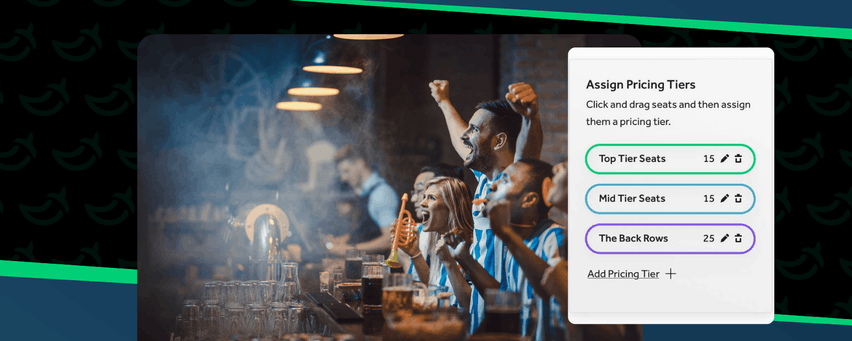
A real 2026-market tier structure looks like this:
🎟️ Free GA: capacity-capped, requires registration, enables headcount management
🎟️ Paid Reserved Viewing: $45–$75, dedicated viewing section, separate entry lane
🎟️ VIP Hospitality: $150–$325, food and beverage included, premium sight lines, hard cap on quantity
🎟️ Sponsor/Comp Tier: 100%-off comp codes with per-code caps, tracked against real inventory
Each audience segment has different expectations.
Some attendees simply want a place to watch the match. Others are willing to pay for better sightlines, premium seating, hospitality packages, food and beverage perks, or exclusive experiences.
Away Days Brewing's Summer Soccer Fest demonstrates how organizers are packaging multiple viewing experiences into a larger event experience. As fan-focused soccer events continue to evolve, offering different ticket options becomes one of the simplest ways to increase revenue while improving attendee satisfaction.
For deeper strategy on structuring this well, see how to price event tickets strategically and ticket add-ons and upsells.
TicketSpice supports native tier configuration, quantity caps, early-bird pricing escalation, group ticketing, and add-on prompts, all on one ticketing page.
Branded Checkout and Why a Third-Party Logo on Your Ticketing Page Costs You Conversions
Your ticketing page is one of the most important conversion points in your entire event marketing funnel.
It is where interest turns into attendance.
It is also where many platforms create unnecessary friction.
When buyers click from your website, email campaign, sponsor promotion, or social ad to a ticketing page covered in third-party branding, the experience changes. Instead of staying inside your event brand, buyers feel like they have been sent somewhere else.
That matters.
For sponsor-backed World Cup viewing parties, it matters even more. Sponsors invest in your event, your audience, and your brand presence. A ticketing page dominated by a third-party platform's logo weakens that experience and makes the event feel less owned by the organizer.
A branded ticketing experience should include:
- Your event logo
- Your colors
- Your event language
- Your sponsor visibility
- A mobile-friendly checkout
- No forced third-party branding
- No unnecessary account creation
This is especially important for fan events like Away Days Brewing's Summer Soccer Fest, where the event experience is tied closely to the host brand. Fans are not just buying access to watch soccer. They are buying into the environment, the community, and the experience the organizer is creating.
The ticketing page should reinforce that.
Mobile experience is another major factor.
Most attendees buying tickets to viewing parties are doing it from their phones. If the checkout page requires pinching, zooming, horizontal scrolling, forced account creation, or too many form fields, buyers abandon.
The fix is simple:
- Keep the first ticket purchase flow short
- Limit required fields
- Allow guest checkout
- Test the full purchase path on a real phone
- Make the event brand visible from start to finish
TicketSpice gives you a fully branded ticketing page with no forced third-party logo, mobile-optimized forms, and a customizable layout your sponsors and buyers will actually see as yours.
Promo Codes, Early-Bird Tiers, and Watch Party Audience Segments That Convert
World Cup viewing parties attract different types of buyers.
A single promo strategy rarely works for all of them.
Some attendees commit early because they already know they want to be there. Corporate groups may wait until they have internal approval. Sponsors may need unique codes for guest access. Past attendees may need a deadline-driven reminder before they take action.
The best promo strategy matches the code type to the audience.
🏷️ Early-bird codes: cap by date or quantity; create real urgency, not the illusion of it
👥 Group codes: unlock purchase for 6+ in one transaction; essential for corporate watch parties
🤝 Sponsor affiliate codes: one unique code per partner so you can report redemptions back to each relationship
🔄 Win-back codes: target past attendees who haven't bought yet; 72-hour expiration drives action
Cap every code with a per-use limit and an expiration date. An uncapped code posted publicly reaches a deal aggregator site within hours and redeems against buyers who would have paid full price. That's not a discount strategy; it's a margin leak.
For the full setup guide, see discount codes for event tickets and how to jumpstart early-bird ticket sales.
TicketSpice's native promo engine supports unlimited code types, per-code redemption caps, expiration controls, and ticket-type targeting. No third-party plugin. No workaround.
Day-of Operations: Capacity Enforcement, QR Scanning, and Walkup Sales Without Chaos
Fan events with a fixed kickoff time create a hard crowd surge pattern. The bulk of your attendees arrive in a 20–30 minute window before the match. Scan throughput at door-open is not a nice-to-have. It's the operational baseline that determines whether the first 10 minutes of your event are controlled or a mess.
T-minus 60 minutes: Devices synced to the live attendee list. Staff roles assigned: scanner, walkup point-of-sale (POS), guest services. Capacity limits per tier visible on every check-in device. Do not rely on staff counting heads. Software-enforced capacity hard stops prevent oversell. Manual headcounts do not.
Door open: QR scan validates ticket type, confirms tier-specific access (GA vs. VIP vs. sponsor), and decrements remaining capacity in real time. Contactless scanning is the throughput floor. Slow queues are the most common attendee complaint at live events, and they're preventable.
Walkup sales: Reserve 15–20% of GA capacity for walkup and door sales. Your walkup POS must read the same live inventory as presales in real time. If they run on separate systems, you will oversell a tier at the exact worst moment.
Capacity compliance is also a legal matter at scale. Events crossing the 1,000-attendee threshold that trigger licensing obligations need real-time enforcement: not a manual counter, not a staff estimate. (Source: FIFA public-viewing guidance, 2024–2026)
Post-event, your attendee list is your most valuable asset for the next on-sale. A well-structured email drip campaign for ticket sales that segments confirmed attendees from no-shows is how you fill next year's event faster and cheaper than running cold acquisition again.
TicketSpice scanning runs on standard tablets and phones (bring your own device), with real-time capacity tracking per tier and full attendee list sync. No proprietary hardware required.
FAQs
Q: What are the top 5 ticketing systems?
A: For organizers running fan festivals and watch parties, the right evaluation frame isn't a ranked list. It's a checklist: Does the platform support mixed free/paid tiers? Does it enforce hard capacity caps? Does it offer flat-fee pricing? Does it provide branded checkout with no forced third-party logo? Does it include native promo tools without extra charges? TicketSpice checks all five boxes for independent organizers who need flexibility without being gouged on fees.
Q: What's better than Eventbrite or TicketMaster for a World Cup viewing party?
A: A platform that supports mixed free/paid ticketing, hard capacity limits, group purchases for corporate buyers, native add-ons, and flat-fee pricing, without pushing your brand off the ticketing page. For that combination, TicketSpice is built for the format.
Q: Do I need a ticketing platform for a free event?
A: Yes. Ticketing for a free watch party gives you headcount management for permits, a hard capacity cap that doesn't require staff to manually count attendees, and an attendee list for pre-event communications. "Free admission" is not the same as unmanaged entry, especially when municipal permits and public-viewing guidelines apply. (Source: FIFA public-viewing guidance, 2024–2026)
Is Your Ticketing Platform Ready For Your Watch Party? Here's How to Find Out:
Run this test before your on-sale opens: configure three ticket types (free GA, paid reserved, VIP), set a hard capacity cap per tier, create two promo codes with expiration dates, add a parking pass as a checkout add-on, and open the ticketing page on your phone. If any step requires a support ticket, that platform will create problems on event day. Not if. When.
The checklist for World Cup viewing party organizers:
✅ Mixed free/paid ticket types in one ticketing flow
✅ Hard capacity enforcement per tier (software-enforced, not staff-dependent)
✅ Branded ticketing page with no third-party logo visible to buyers
✅ Flat-fee pricing (calculate total cost at your projected attendance before committing)
✅ Native promo code engine with caps, expirations, and per-tier targeting
✅ Group ticketing for corporate and sponsor guest purchases
✅ Add-on configuration for upsell at checkout
✅ Real-time check-in and capacity tracking on standard mobile devices
If your platform cannot support those basics, it will not get easier on event day.
World Cup viewing parties in 2026 will be bigger, more layered, and more operationally demanding than the watch parties organizers ran in previous years. The events that succeed will be the ones that treat ticketing as part of the event infrastructure, not just a payment step.
Sign up with TicketSpice today and get your World Cup viewing party on sale before the competition does.