
If you’re running events, you’re already making dozens of marketing decisions under pressure.
Which channels deserve more budget? Why are ticket sales stalling even though traffic looks strong? Who actually shows up on event day—and who doesn’t?
Event marketing analytics exists to answer those questions clearly and early enough that you can still act on them. Done well, analytics helps event organizers understand what’s working, what’s leaking revenue, and where small changes can create outsized improvements in sales, attendance, and attendee experience.
What Is Event Marketing Analytics?
Event marketing analytics is the process of tracking and analyzing attendee behavior, campaign performance, and outcomes across the entire event lifecycle: from first touch through post-event follow-up.
It connects marketing efforts like ads, emails, and promotions directly to ticket purchases, attendance, and revenue.
It’s not about collecting vanity metrics or generating a post-event report that lives in a folder. And it’s not something you bolt on after the event is over. Event marketing analytics is most useful when it’s tied to real decisions you can make before and during your event.
How Event Analytics Differs From Traditional Marketing Analytics
Traditional marketing analytics often focuses on long-running campaigns, lead nurturing, and incremental optimization over time.
Event analytics has to operate differently.
Event marketing analytics is built around fixed timelines, clear conversion moments, and real-world outcomes.
Unlike traditional marketing, it has to account for both digital behavior and physical attendance, as well as the gap between purchasing a ticket and actually showing up.
It also places far more emphasis on real-time performance, since missed insights during a short sales window can’t be recovered later.
Core Use Cases for Event Analytics Tracking
In practice, event teams use analytics to answer very specific operational questions.
Campaign performance tracking helps you understand which channels and messages are actually driving ticket purchases instead of just clicks or traffic.
Ticket funnel optimization reveals where people hesitate or abandon the process before completing a purchase.
Attendance and check-in analysis show how many buyers become attendees, and where drop-off occurs.
Revenue attribution connects promo codes, campaigns, and partners directly to sales.
Engagement measurement looks beyond ticketing to understand upgrades, session participation, and post-event actions.
Key Events You Should Be Tracking
In analytics terms, “events” are measurable actions. For live and hybrid events, use the measurements below as your checklist:
✅ Page views and landing page interactions
✅ Ticket page starts and completes
✅ Ticket purchases and upgrades
✅ Email opens and link clicks
✅ Check-ins and attendance
✅ Post-event actions like replays, follow-ups, or future registrations
Tracking these consistently gives you a full picture of how people move through your event funnel.
Event Tracking Examples (What This Looks Like in Practice)
It’s time to take marketing out of the theoretical and into the practical. Imagine you’re running paid ads for an upcoming event. One campaign is driving a lot of traffic and ticket sales, but when you look closer, most of those buyers aren’t checking in on event day. Another campaign brings in fewer purchases, yet those attendees show up consistently and are more likely to upgrade. Without analytics that connect marketing, ticketing, and attendance, those differences are easy to miss.
The same thing happens with email. One message might have an average open rate but quietly drives a spike in ticket upgrades or add-ons. Another email gets lots of clicks but leads to stalled checkouts. When you can see those patterns clearly, you know which messages to repeat, refine, or retire.
Promo codes offer another layer of insight. A partner code might generate steady revenue but lower attendance, while a time-based discount creates urgency and better turnout. Analytics turns those observations into evidence instead of assumptions.
The real advantage shows up when you see these signals early enough to act. During an active sales window, real-time visibility allows you to shift budget, adjust messaging, or double down on what’s working. On event day, live check-in data helps teams anticipate bottlenecks, staffing needs, or unexpected attendance gaps. Instead of reacting after the fact, analytics lets you make informed decisions while there’s still time to influence outcomes.
Building an Event Analytics Tracking Framework
A strong tracking setup starts with structure.
1️⃣ Define the outcome - What does success mean? Is it revenue, attendance, engagement, or all three?
2️⃣ Identify measurable actions - Map actions that indicate progress toward that goal.
3️⃣ Choose tracking points - Decide where and how data gets captured.
4️⃣ Connect tools and data sources - Ensure ticketing, email, and analytics platforms talk to each other.
Without a solid framework, even good data becomes noise that’s difficult to interpret or act on.
Keys to Effective Event Marketing Measurement
Good measurement doesn’t happen by accident. It starts with intentional choices made before your event launches. A few foundational principles make analytics far more useful in practice:
📌 Set clear goals before campaigns begin
📌 Quantify success beyond raw attendance numbers
📌 Align metrics with real business outcomes
📌 Avoid tracking everything just because you can
How Event Analytics Breaks (and How to Prevent It)
Event marketing analytics only works if the data behind it is consistent, trustworthy, and interpretable. Most analytics problems don’t come from bad tools—they come from small setup issues that compound over time.
Before you launch an event or campaign, this short checklist helps ensure your tracking is reliable and usable:
✔️ Campaigns use consistent naming conventions
✔️ Metrics have a clear owner and single source of truth
✔️ Tracking is tested end-to-end before launch
✔️ Conversion definitions are documented and agreed upon
✔️ Ticketing, marketing, and attendance data are connected
When analytics breaks down, it’s usually for predictable reasons:
❌ Tracking is set up differently for each campaign
❌ Definitions change mid-event, making comparisons unreliable
❌ Data lives in disconnected tools that never fully reconcile
Clean analytics isn’t about perfection. It’s about creating enough consistency that trends are visible, decisions are defensible, and insights can be trusted when they matter most.
Measuring the ROI of Event Marketing Analytics
Measuring ROI in event marketing means understanding value in context. No single metric tells the full story, which is why effective ROI measurement looks at performance from multiple angles.
💰 Cost per ticket – Evaluates marketing efficiency by showing how much you spend to generate each sale.
👥 Cost per attendee – Accounts for no-shows and attendance gaps to reflect real turnout.
📈 Revenue per attendee – Highlights the impact of upgrades, add-ons, and on-site sales.
🔁 Engagement-driven outcomes – Measures longer-term value created through follow-ups, repeat attendance, or memberships.
Together, these metrics provide a more accurate picture of event performance than ticket sales alone.
How to Derive Actionable Insights From Event Data
Data becomes insight only when it leads to change. Event analytics helps you identify where people drop off in the funnel, which channels consistently outperform others, and where pricing or promotions may be misaligned.
For example, you might discover that early-bird tickets sell quickly through email but stall once pricing increases, while paid ads perform better closer to the event date. That insight could lead you to extend early-bird pricing for email subscribers, shift ad spend later in the sales cycle, or introduce a mid-cycle incentive to smooth demand. Over time, patterns like these inform smarter campaign timing, better pricing strategies, and more predictable outcomes for future events.
How TicketSpice Supports Essential Features for Event Marketing Analytics
Effective event analytics requires having the right capabilities built into the systems that matter most. These TicketSpice features make event marketing analytics practical, actionable, and reliable.
🔷 Source-level sales tracking
Track where ticket sales actually come from using promo codes, tracking fields, and integrations that connect revenue directly to ads, emails, and partner campaigns.
🔷 Full-funnel ticket visibility
See page views, ticket starts, completed purchases, and abandoned checkouts in one place to understand where interest turns into revenue—or friction.
🔷 Attendance and check-in analytics
Connect ticket purchases to QR-code check-ins to measure real attendance, identify no-show patterns, and compare turnout across channels and ticket types.
🔷 Upgrade, modification, and add-on tracking
Capture upgrades, downgrades, add-ons, and edits to understand true revenue per attendee, not just initial checkout totals.
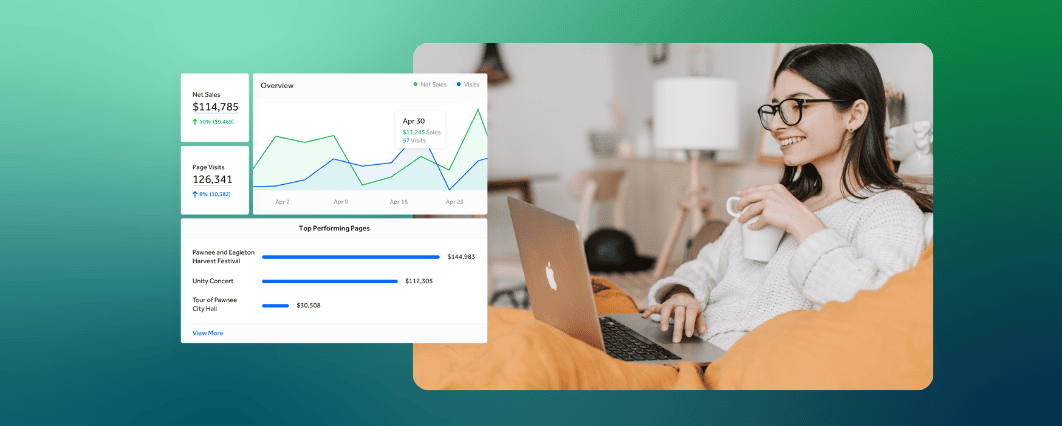
🔷 Real-time dashboards and reporting
Monitor live sales and attendance during active campaigns and event days, with exports that are immediately usable without heavy cleanup.
🔷 Clean data ownership and portability
Maintain full ownership of your event data with flexible exports and integrations that support deeper analysis without locking insights behind closed systems.
Together, these capabilities ensure that event marketing analytics isn’t just something you review after an event; it’s something you use to make smarter decisions before and during it.
FAQs
What is event marketing analytics used for?
To understand what drives ticket sales, attendance, and engagement.
What key metrics should I track for events?
Ticket interactions, purchases, check-ins, and post-event actions.
How do I measure event marketing ROI?
By evaluating costs against revenue, attendance, and engagement outcomes.
Can event analytics work in real time?
Yes, and it’s most valuable during active campaigns and live events.
Key Takeaways
🔑 Event marketing analytics helps you make better decisions before and during your event, not just after it’s over.
🔑 Ticket sales alone don’t tell the full story; attendance, upgrades, and engagement also matter.
🔑 The most useful insights come from connecting marketing activity, ticketing behavior, and check-in data in one system.
🔑 Clean, consistent tracking beats complex setups that no one trusts or uses.
🔑 Analytics is only valuable when it leads to action that influences outcomes.
Ready to see results? You can get started with TicketSpice today, or reach out to our support team with questions.
We’re here to help you have the best event ever!
— The TicketSpice team