
Most ticket-selling emails follow the same tired routine: buy now, buy now again… seriously, please buy now.
Then everyone wonders why the list goes quiet.
The problem is not email. Email works when it has a job.
In TicketSpice’s Digital Marketing Workshop, co-founder Eric Knopf called out the real issue: too many campaigns send one announcement, repeat the same ask, and expect it to carry the whole sales season by itself.
High-converting email drip campaigns do something different. They reinforce value, create urgency, and give buyers more than one clear reason to act.
The goal is not sending more emails. It’s sending the right sequence at the right time.
Why Ticket-Selling Emails Underperform
Most ticket-selling emails underperform because they don’t answer the most important question: why now?
A buyer may like your event, plan to go, and fully intend to buy.
Just not right now. Maybe later.
Famous last words. Later is where ticket sales go to nap. That’s the problem with a standalone “tickets are available” email. There is no deadline, no incentive, and no cost to waiting.
A stronger drip campaign gives buyers a real reason to act now:
👉 Prices increase Friday.
👉 VIP is almost gone.
👉 Past attendees get first access before the public sale.
Now the buyer has a decision to make.
Understanding Buyer Psychology
Most buyers aren’t sitting around waiting for your ticket link to change their lives.
They’re busy. They’re distracted. They’re interested, but not always ready. That’s why a good drip campaign doesn’t just repeat the same ask. It moves the buyer through a sequence.
One message can make the offer feel valuable. The next can show that inventory is limited. Another can remind them that the price changes soon. The final reminder can make the closing window impossible to ignore.
That’s buyer psychology in practice. Match the message to the moment.
The point is not to sound louder. It’s to give each email a clear reason to exist.
Five Drip Campaign Frameworks
A good drip campaign is not “buy now” five times in a trench coat. It’s a planned sequence that builds urgency and gives buyers multiple chances to act.
Early Access Campaign
Early access campaigns give a specific audience first access before the public sale, such as past attendees, members, VIP buyers, donors, season pass holders, or subscribers.
🔓 Early access is coming
🔓 Early access is open
🔓 Early access ends tonight
This works because people feel like insiders. Access can be the incentive.
Exclusive Offer Campaign
Exclusive offer campaigns promote a limited-time ticket tier, premium experience, or special package. Think VIP upgrades, family bundles, parking packages, merch add-ons, meal packages, or member-only pricing.
💎 Launch the offer
💎 24 hours remaining
💎 Final hours reminder
The key is clarity. “Special offer” is vague. “48-hour VIP upgrade window for past buyers” gives people something specific to act on.
Almost Gone Campaign
Almost gone campaigns use real inventory updates to create urgency.
🚨 VIP is sold out
🚨 Only a few reserved seats remain
🚨 Only 100 spots left
🚨 Saturday is nearly full
These emails combine scarcity, social proof, and FOMO. Other people are buying, inventory is moving, and waiting has consequences.
Just keep it honest. Fake urgency is how you train people to ignore you.
Price Increase Campaign
Price increase campaigns are one of the cleanest ways to drive earlier purchases because the message is simple: buy before the price goes up.
📈 Prices increase soon
📈 Reminder before the increase
📈 Final notice before prices go up
Even a small increase can create urgency because waiting now has a cost.
Event Countdown Campaign
Countdown campaigns are built for the final push during the last week before your event, attraction date, or offer deadline.
⏰ 3 days left
⏰ 2 days left
⏰ Tomorrow
⏰ Last chance
⏰ Event starts today
Whether the campaign is built around early access, limited inventory, a price increase, or the final countdown, every message should give people a fresh reason to act.
Building Your First Campaign
Start simple. Choose one audience, one offer, and one reason to act now.
For example:
Audience: Past attendees
Offer: Early access to tickets
Urgency: Access ends Friday
Then build three emails:
🎟️ Early access is coming
🎟️ Early access is open
🎟️ Early access ends tonight
You don’t need a 17-email masterpiece with a flowchart that needs its own onboarding process.
After the campaign runs, review what happened. Which email drove sales? Did buyers act earlier? Did the final reminder close the loop?
Use that information to improve the next campaign.
Best Practices
🔑 Use personal sender names when possible. A conversational email from a real person usually beats a faceless blast from “Marketing Department Incorporated.”
🔑 Keep emails direct. Tell people what is happening, why it matters, and what to do next.
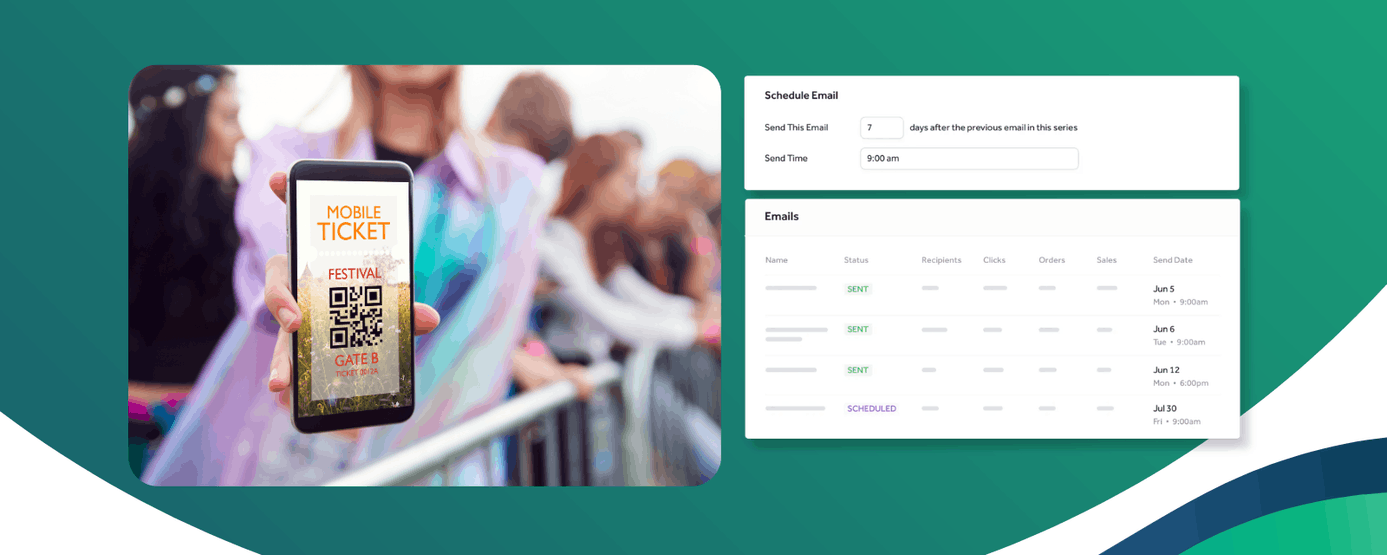
🔑 Send a sequence, not the same reminder. Each email should have a different job, from creating urgency to making the final ask.
🔑 Remove buyers from future campaign emails once they purchase. Nothing says “we are not paying attention” like asking someone to buy the ticket they already bought.
🔑 Track results. Watch what drives clicks, purchases, promo code redemptions, and ticket revenue. Then do more of what actually sells tickets.
Start Building Drip Campaigns That Sell
Email drip campaigns are not about shouting louder. They’re about guiding the right buyers toward the right offer at the right time.
TicketSpice helps organizers build automated drip campaigns that remove buyers from future campaign emails, focus follow-up on prospects who have not purchased yet, and connect email performance to actual ticket sales.
Ready to make email feel less like a panic button and more like a sales engine? Build your next drip campaign with TicketSpice.
We’re here to help you sell earlier, follow up smarter, and make every email earn its spot in the inbox.
— The TicketSpice Team